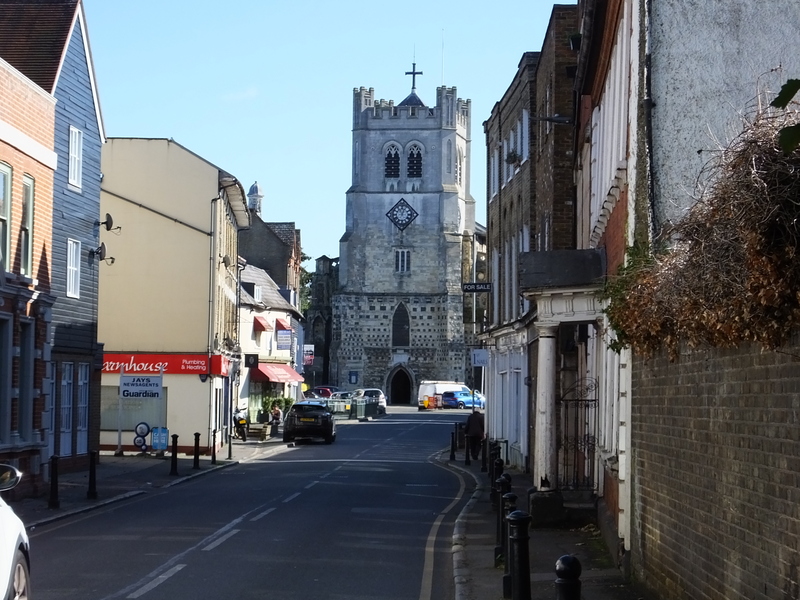
Yesterday the saint of the day in the calendar was St Edward the Confessor who granted Waltham Abbey to his brother in law Harold. King Edward’s death in 1065 led to the election of Harold as his successor on the throne.
Today Wednesday 14 October is the 960th anniversary of the Battle Hastings which followed within ten months.
This has resonance not only in Sussex but in the Lea Valley which was one of the first places beyond the capital to know of the enormity of the Norman invasion.
In 1066 King Harold prayed visited Waltham Abbey on his way south from the Battle of Stamford Bridge to confront invading William of Normandy at the Battle of Hastings.
Harold had refounded the monastic community at Waltham and had a devotion to its life-size stone crucifix given by King Cnut’s standard bearer Tovi.
The 12th-century Waltham Chronicle confirms that Harold did indeed return to Waltham Abbey after victory in the north but that it was here that he heard of the Duke of Normandy’s landing in Sussex. Much of Harold’s forces had dispersed meaning that he faced invader William at a disadvantage
It appears that the King took two older canons of the abbey with him to be part of his non-combatant division. Their main duty was to recover his body should battle go badly. As we know the Saxons were defeated at the Battle of Hastings in October and the clergy were suddenly called forward to the battlefield to secure the royal corpse. Something that was feared from the start in Waltham.
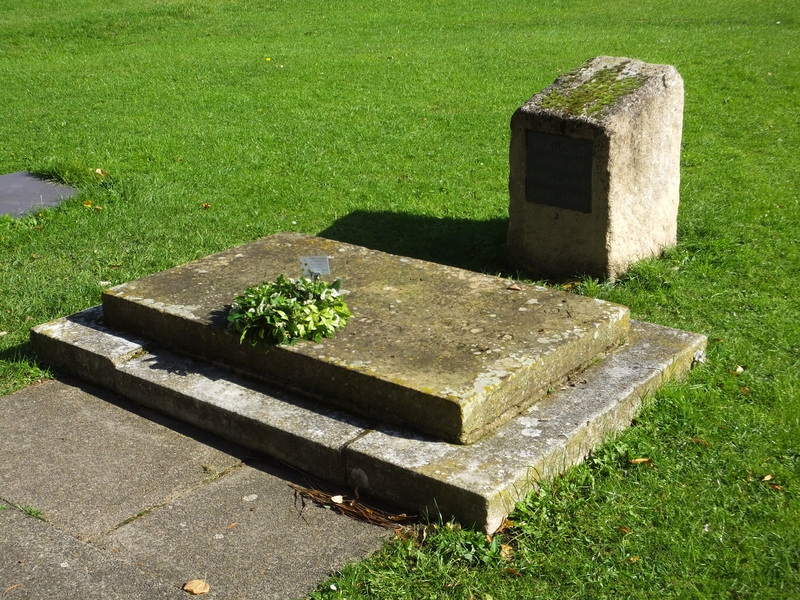
The canons brought Harold’s body back home to Waltham. How they found the fallen king remains subject to much speculation. The body is said to have been barely recognisable and rumours abounded for years that Harold had escaped and was living quietly in seclusion.
William the Conqueror was happy to release the body of his predecessor because it was important to recognise him as a king. William’s claim to the throne was that he was the true heir of Harold.
Meanwhile Waltham Abbey was cautious about how much they should promote the presence of the Saxon king’s body when there was the new powerful Norman regime in charge. Pilgrims or tourists were allowed but not encouraged.
The tomb was placed in the centre of the chancel. It was the destruction of the Abbey church‘s east end at the Reformation that has left the tomb in the open.
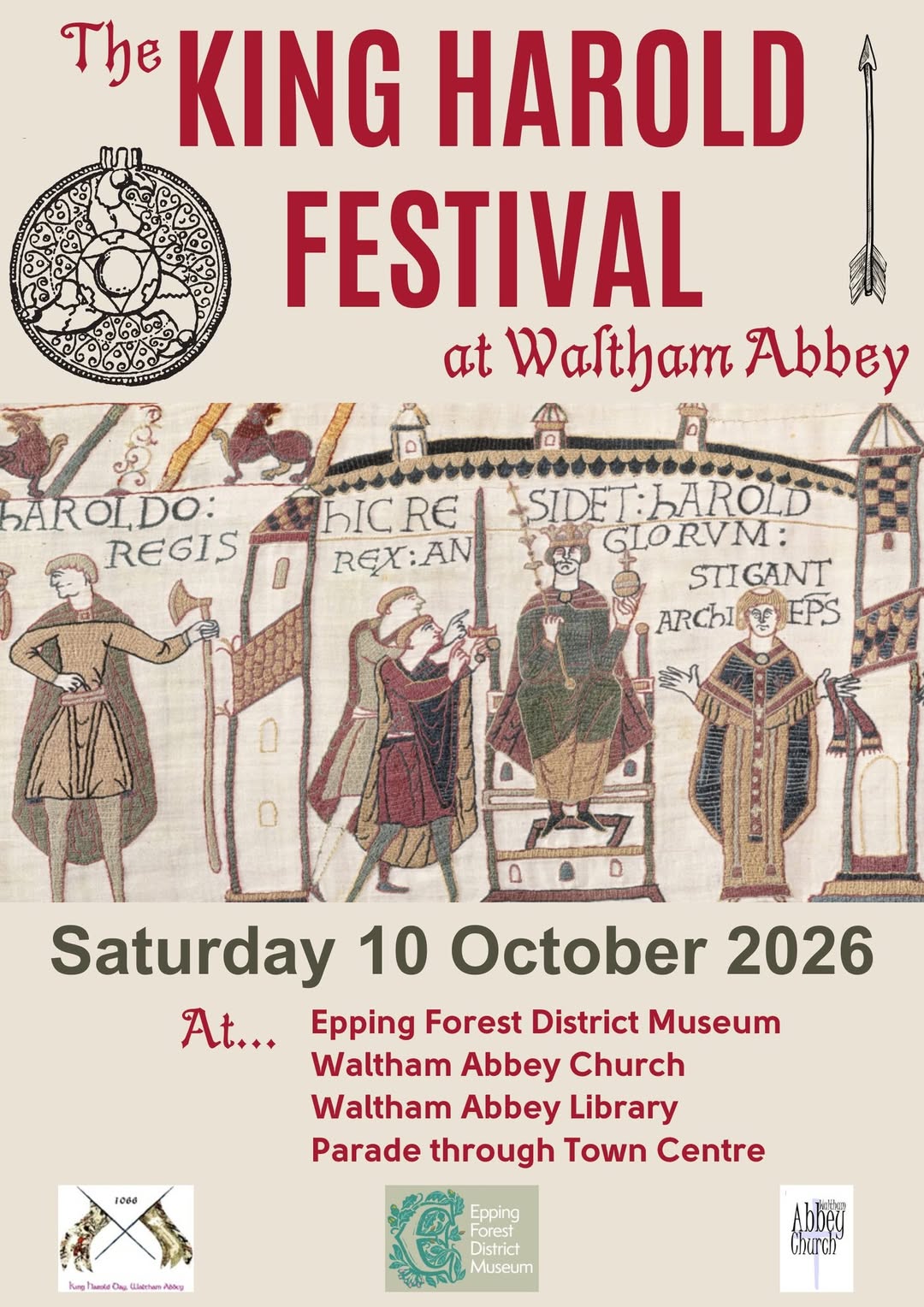
The Battle of Hastings was fought on 14 October 1066 and last Saturday the town of Waltham Abbey marked it with the King Harold Festival as it does every year.